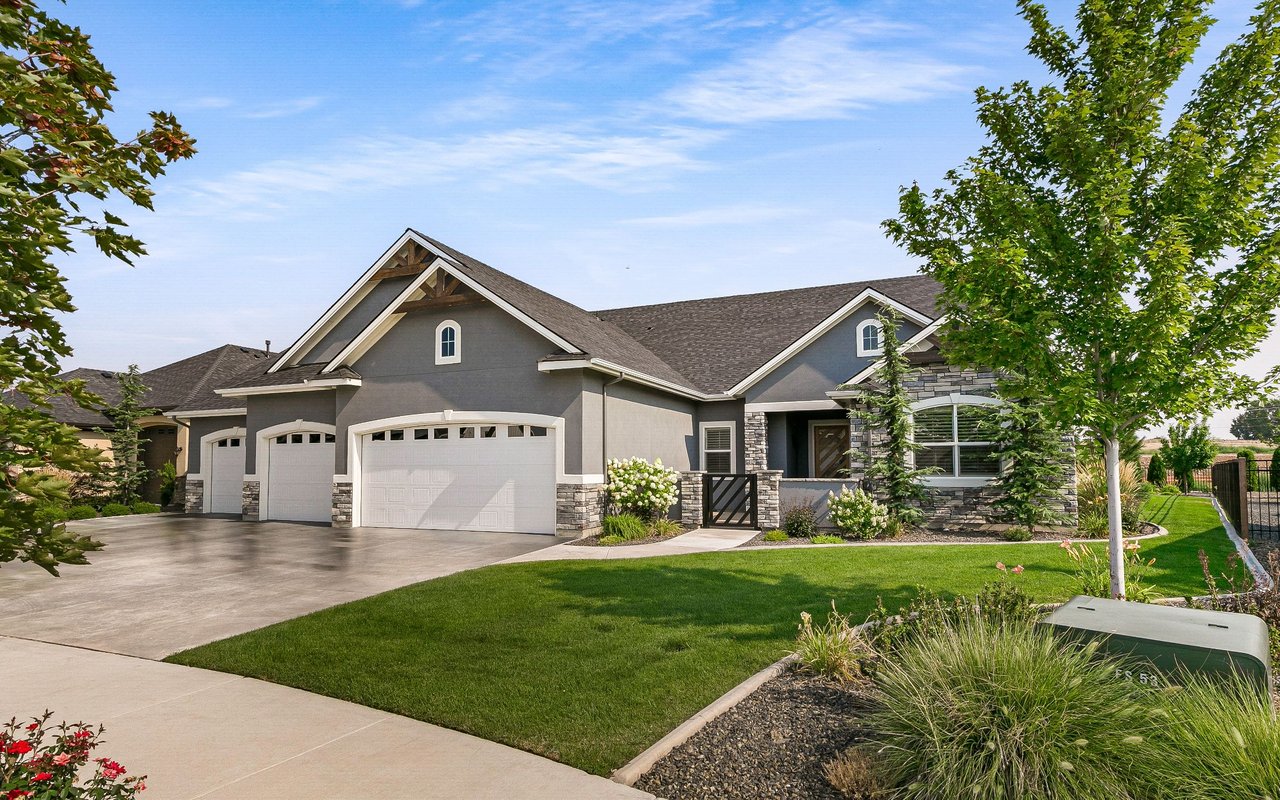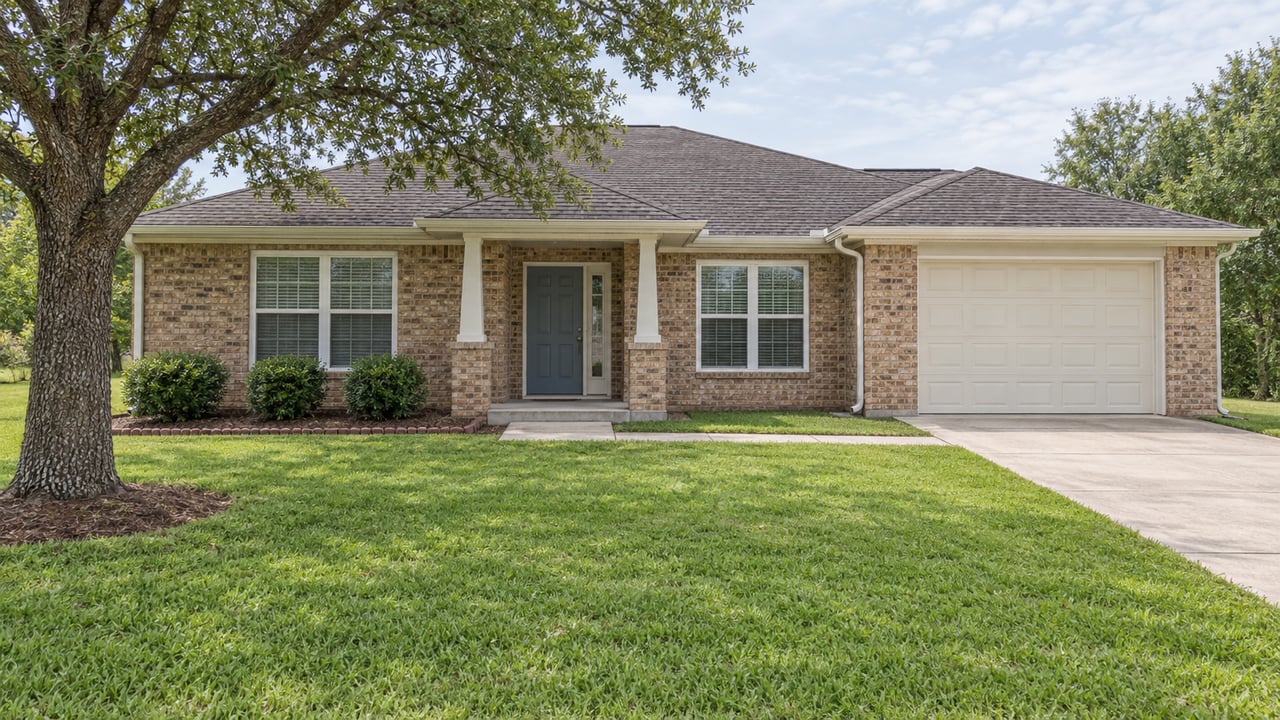
Take two houses at almost the same price. One is a three-bedroom on an established Escambia County street, built around 1985, with original framing and a roof that has been through at least one replacement. The other is a D.R. Horton plan at Fallschase at Pathstone, off Nine Mile Road. The builder's community page lists it from $332,900 for homes starting at 1,568 square feet.
That $332,900 matches the single-family median that Florida Realtors reported for the Pensacola-Ferry Pass-Brent metro in August 2026. So at the middle of this market, the resale seller is going up against a builder, not just the house down the street. The two homes pass through very different paperwork before anyone signs.
The resale's paperwork starts before the offer is final
For many older homes in Florida, insurance decides how a deal goes. Inspections are a big part of that.
Citizens Property Insurance requires a four-point inspection for any homeowner application on a property more than 20 years old. A licensed inspector reports the age, type and condition of the roof, wiring, plumbing and HVAC. Citizens says serious hazards, such as exposed wiring or active leaks, should be repaired before an application goes in. Citizens also needs proof of at least five years of remaining life for shingle roofs older than 25 years and hard roofs older than 50. If the roof falls short, a full replacement has to be documented before Citizens writes a policy.
Private carriers set their own standards. Florida's Insurance Consumer Advocate describes four-point inspections as commonly required, with timing and thresholds that vary by insurer. State law sets a floor under all of them. Under Florida Statute 627.7011, an insurer cannot refuse coverage solely because of roof age if the roof is less than 15 years old. For older roofs, the homeowner can pay for an inspection. If it shows at least five years of useful life left, the insurer cannot deny coverage on age alone. Roof age is counted from when the entire roof surface was last built or replaced.
A new build clears every one of those age thresholds on the day it closes. That advantage costs the builder nothing, but the resale seller can't offer it at any price.
In Pensacola, "resale" usually means past the 20-year line
The housing stock here is older than many buyers expect. In the Census Bureau's 2024 American Community Survey five-year estimates, the median owner-occupied home in Escambia County was built in 1985. Within the city of Pensacola, the median year is 1970.
Counting by decade gives the same picture. The same survey shows 60,968 of Escambia County's 83,586 owner-occupied homes, or 72.9%, were built before 2000. Inside city limits it's 13,964 of 16,118, or 86.6%.
Every one of those homes is more than 20 years old in 2026, which puts it inside Citizens' four-point requirement. Many have roofs that have already been replaced at least once, so the date of the last full replacement becomes a number buyers ask about early.
What the builder is really selling is a lower first-year payment
While the resale seller is gathering roof receipts, the builder is working on the mortgage rate.
Freddie Mac's Primary Mortgage Market Survey put the national 30-year fixed average at 7.40% for the week of October 8, 2026. That's up from 7.28% the week before and from 6.30% a year earlier. A rate jump of more than a full point in a year changes the monthly cost of the same house, and builders have answered with buydowns.
This October, DSLD Homes is advertising a 2/1 buydown with an initial rate as low as 4.99% on FHA, VA and RD loans, alongside a 7.93% APR. The offer adds up to $12,000 toward the buydown or closing costs, plus free installed window blinds. It comes with conditions. The purchase agreement has to be written by October 31 and the home closed by December 31, with financing through DSLD Mortgage and title through the seller's preferred title company. The 4.99% is the starting rate. The APR printed next to it reflects the cost of the loan across its full term.
These offers are priced right at the middle of the market. Here's what the builders' community pages showed when we checked them for this post:
| Community | Builder | Location | Advertised pricing |
|---|---|---|---|
| Fallschase at Pathstone | D.R. Horton | Off Nine Mile Road, 32526 | From $332,900 |
| Reserve at Brookhaven | D.R. Horton | Cantonment, off Devine Farms Road | From $274,900 |
| Eagle Pointe | DSLD Homes | Pensacola, 32526 | $299,990 to $358,990 |
| Palmetto Crossing | DSLD Homes | Pensacola, 32526 | $329,990 to $423,990 |
| Iron Rock | DSLD Homes | Cantonment, 32533 | $369,990 to $614,990 |
Some of those starting prices have already come down. At Reserve at Brookhaven, D.R. Horton's live inventory shows homes marked to $274,900 from a stated $296,900, and to $379,900 from a stated $421,900. Builder pages change week to week, so these prices are a snapshot and can move.
Why a smaller inventory didn't push prices up
Here's the puzzle. The Pensacola Association of Realtors' August 2026 snapshot shows single-family inventory falling from 3,720 in August 2025 to 2,951 in August 2026, about 21% lower. That count includes contingent listings. New residential listings fell from 943 in August 2025 to 894 in August 2026, a decline PAR puts at 5.1%. In most textbook markets, fewer homes for sale means higher prices.
That didn't happen. PAR's median sale price was $325,000 in August 2026, compared with $324,900 a year earlier. Florida Realtors' metro figures for the same month show the single-family median up just 0.5% to $332,900, on 701 closed sales, which was 5.3% fewer than in August 2025.
No local report we found directly links new construction to flat resale prices, so what follows is our reading of the numbers. Three forces line up behind it. Rates rose more than a point in a year. Builders have homes priced at the median and are willing to pay part of the buyer's rate. And the typical resale is old enough to need extra insurance steps. A buyer weighing a monthly payment against a renovated kitchen will often find the payment wins. Fewer listings did give resale sellers some leverage, but the builder offers around them cap how far they can push price.
Demand hasn't disappeared, though. PAR reported August 2026 pending sales up 9.7% from August 2025 and up 11.3% from July. Buyers are still signing contracts. Across the metro, Florida Realtors counted 5,888 single-family sales through August 2026, 7% more than in the same stretch of 2025.
Where the older house wins back ground
The resale home has some advantages in the insurance math too, and several are documented in public programs.
Wind mitigation credits. Florida insurers file premium discounts for hurricane-resistant features. The Office of Insurance Regulation's form OIR-B1-1802 documents them, including roof covering, roof-deck and roof-to-wall attachment, roof shape, secondary water resistance and opening protection. The current version took effect April 1, 2026, and stays valid for up to five years as long as the structure hasn't materially changed and the report contains no inaccuracies. The form itself cautions that not every feature qualifies for a discount. An older home with hurricane straps or a re-roof that added a sealed deck can have real credits already documented.
Grant money only an older home can use. My Safe Florida Home offers grants for site-built, owner-occupied homes with a homestead exemption and an insured value of $700,000 or less. Original construction has to predate January 1, 2008. Under the matching structure, the state puts in $2 for every $1 from the homeowner, up to $10,000. The work must be recommended by the program's own inspection, and construction can't start before the grant is approved. The program's support center says it is accepting applications, which starts with creating an account and completing a prioritization questionnaire. A new build doesn't qualify.
A softer insurance market. Under Citizens' approved 2026 rates, the average Citizens HO-3 homeowner premium in Escambia County drops 6.8%, from $3,965 to $3,697, across 2,351 policies. The new rates apply to new policies from July 1 and to existing policies at renewal. Private carriers are adding capacity as well. In May 2026, OIR said 20 companies had entered Florida since the recent reforms. One of them, Builder Reciprocal, focuses on new and newer home communities. Even the new capacity favors new construction in places.
What a fair comparison collects from each house
Comparing list prices at about $330,000 leaves out most of what separates these two homes. Here's what a fair comparison gathers from each one:
- From the new build: the note rate after the buydown ends, the APR, and the lender and title company the incentive requires.
- From the new build: the contract and closing deadlines, and whether the incentive still applies if either date slips.
- From the resale: the date of the last full roof replacement and the roof material, since Citizens' 25-year and 50-year thresholds depend on it.
- From the resale: any existing four-point report, and any existing OIR-B1-1802 wind mitigation form that is still within its five-year window.
- From the resale: the year built, since a home built before 2008 may qualify for My Safe Florida Home if the buyer homesteads it.
A few questions that come up
Does every insurer require a four-point at 20 years? No. Citizens uses that threshold. Florida's Insurance Consumer Advocate says private carriers set their own standards and timing.
Can an insurer turn down a 16-year-old roof just for its age? Under Florida Statute 627.7011, an insurer has to allow a homeowner-paid inspection first. If the inspection shows at least five years of useful life left, the insurer can't deny coverage based on age alone.
When does newer market data come out? Florida Realtors listed Friday, October 16, 2026, as the release date for its next metro report, which will cover September.
If you're weighing a Nine Mile Road new build against an older home in town, Luker Smith can put both on paper side by side. That means the roof date, the four-point items and the wind mitigation features on one, and the post-buydown rate and incentive conditions on the other. A background in construction helps on both sides of that comparison. Let's Connect.
This article is general information, not legal, tax or financial advice. Consult a qualified professional about your situation.