Thinking about buying a brand-new home in Cantonment? It can be exciting to picture clean finishes, modern layouts, and less immediate maintenance, but new construction comes with its own timeline, paperwork, and decision points. If you want to buy with more confidence, it helps to understand what is actually being built here, what varies from one community to the next, and where buyers need to slow down and verify the details. Let’s dive in.
Cantonment New Construction Snapshot
Cantonment offers a wide range of new-construction options right now, which is one reason the area gets attention from buyers with different budgets and goals. Current community examples include townhomes in the high $100s, single-family homes in the mid-$200s to low-$300s, and larger homes that can reach into the $600s.
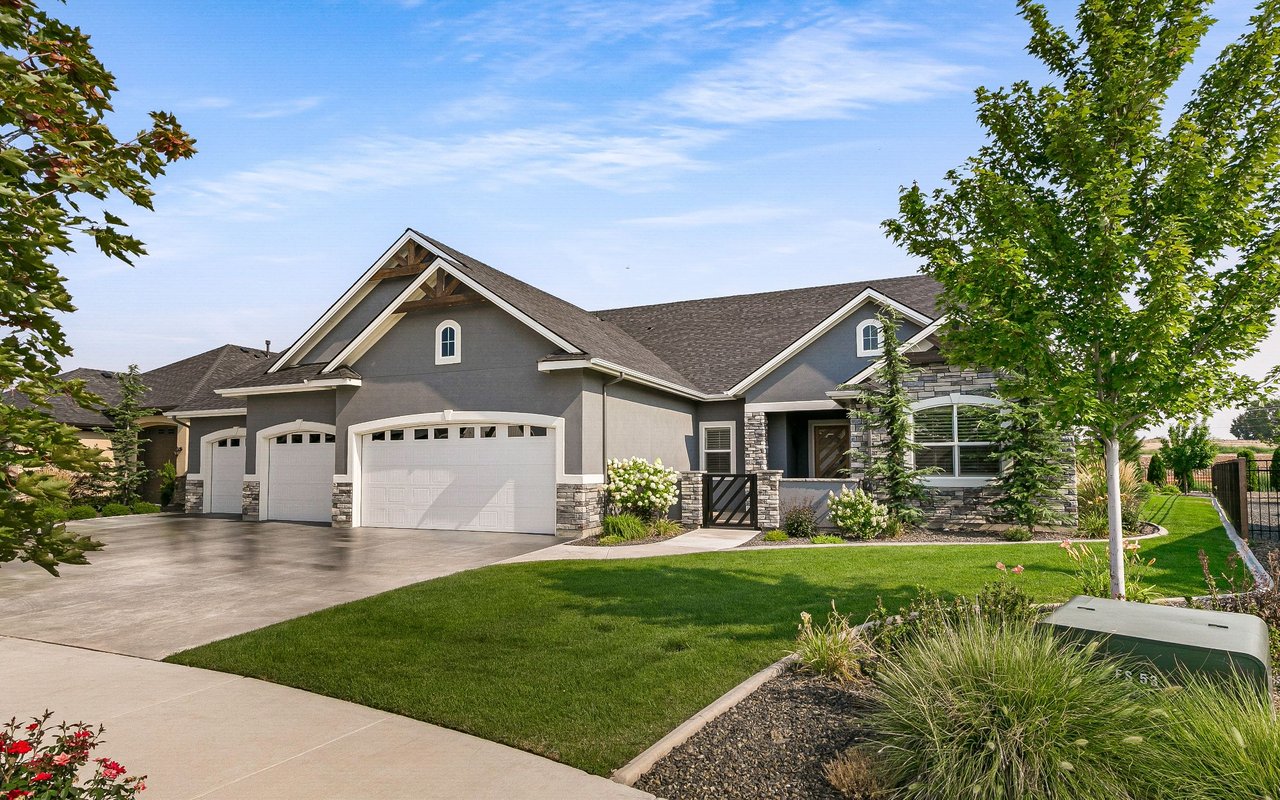
You are also not looking at just one style of housing. Active communities include townhomes, cottage-style homes, patio-home products, standard single-family homes, and larger estate-style options. In practical terms, that means your search should start with how you want to live, not just the price point.
Many builders also market Cantonment around access to US-29, I-10, Pensacola, Navy Federal, UWF, shopping, beaches, and military routes. Some communities are HOA-governed and may include amenities like pools, cabanas, barbecue areas, trails, dog parks, or clubhouses. That can be appealing, but it also means you should review the specific community structure and features before you decide.
Home Types and Floor Plans
One of the biggest things to know about new construction in Cantonment is how much floor plans can vary by community. Some neighborhoods focus on smaller lots and simpler footprints, while others offer larger homesites and more square footage.
Current examples show that lot and home size can differ quite a bit. Adams Homes markets Allison Acres with ten floor plans on 40- to 50-foot lots, Pine Top as a 70-lot patio-home community with plans from about 1,425 to 2,025 square feet, Turtle Creek with all-vinyl cottage homes, and Pecan Valley as an estate-home community with homes from roughly 1,605 to 2,948 square feet.
Across the market, buyers are likely to see:
- Open-concept layouts
- Three- to five-bedroom plans
- One- and two-story options
- One- and two-car garages
- Detached homes and townhome options
That variety is helpful, but it also makes comparison harder. A home that looks similar online may sit on a very different lot, have a different exterior material package, or offer less flexibility in layout than another home at a similar price.
Finishes Can Look Similar, But Specs Matter
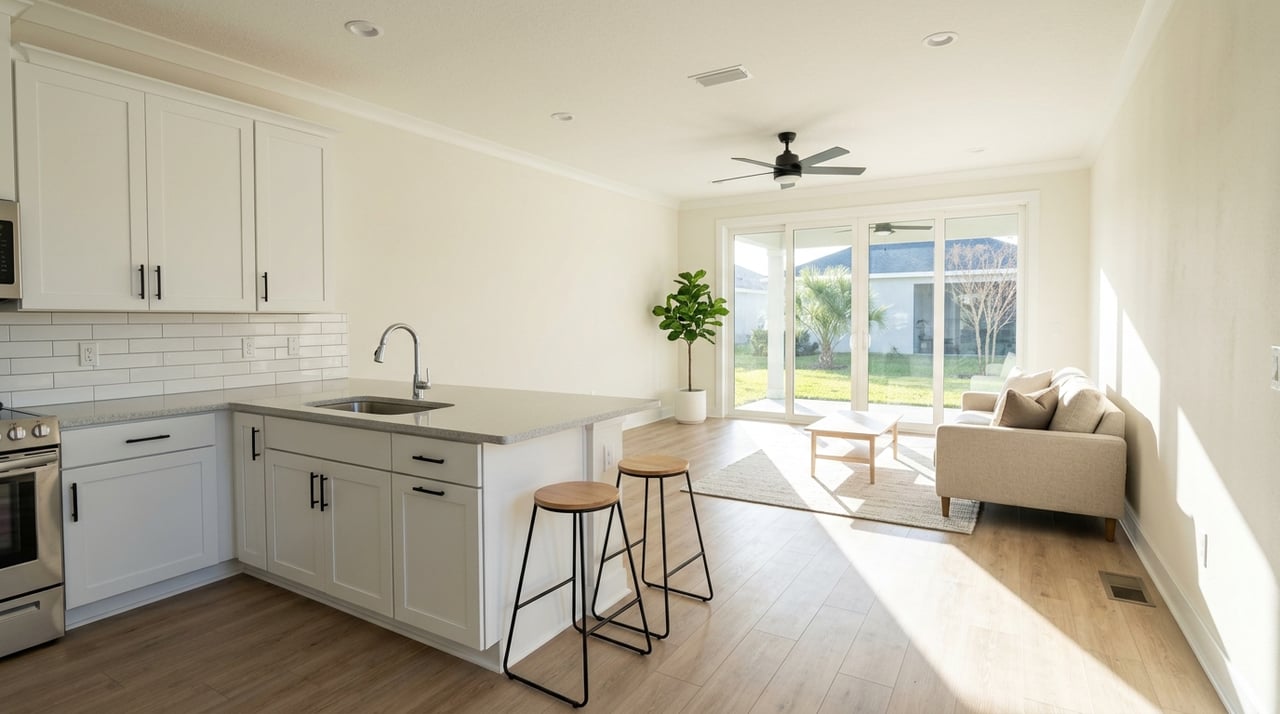
A lot of Cantonment new builds advertise finish packages that sound familiar from one builder to the next. Common features include granite countertops, stainless appliances, shaker-style cabinetry, EVP or LVP flooring, smart-home features, sodded yards, sprinkler systems, and exterior combinations like brick, brick-and-vinyl, or vinyl.
Those features are useful for getting a general sense of the market, but they should not be treated as a guarantee of what you are buying. Builder marketing often notes that pricing, finishes, features, and availability can change. That is why the homesite spec sheet matters more than model-home photos.
When you compare homes, look beyond cosmetics. Escambia County’s plan-review checklist includes product-approval paperwork, which is a good reminder to confirm items like windows, roofing, doors, and other code-sensitive components. Countertops and cabinet colors are easy to notice, but the more important long-term questions often involve the materials and systems you do not think about every day.
Move-In Ready vs. Under Construction
In Cantonment, you may be choosing between a home that is already complete and one that is still being built. That is not a small detail. It affects your financing timeline, your move date, and how much flexibility you may have in the final product.
A move-in-ready home can simplify timing and reduce some uncertainty. You can usually see the exact finishes, layout, and homesite condition before making a final decision. That can be especially helpful if you are relocating on a tighter schedule.
A home under construction may give you a cleaner alignment with your preferred lot or plan, and in some cases it may allow for more input on finishes depending on the stage of construction. But it also requires more patience and more coordination. If your timeline is fixed, you want your financing and moving plans lined up early.
What to Verify Before You Commit
Builder brochures and community pages are a starting point, not the finish line. Before you move forward, make sure you confirm the details tied to the specific home, not just the neighborhood.
Here are a few smart items to verify:
- The exact floor plan and elevation
- The homesite location and lot dimensions
- Included features versus upgrade items
- Exterior materials and interior finish selections
- Estimated completion timing
- HOA structure and listed amenities
- Garage size and storage layout
- Yard features like sod and irrigation
This is where a detail-minded approach matters. A construction-aware review can help you compare what is actually included, how the layout will function day to day, and whether the finish package supports the value you expect.
Permits and Inspection Stages
Escambia County outlines a formal path for construction that begins with research into zoning, future land use, floodplain designation, and parcel number information. From there, projects move through Development Order review, building permit issuance, construction, and then final approval through a certificate of occupancy or completion once inspections are cleared.
For buyers, the most useful takeaway is that new construction still needs careful checkpoints. Just because a home is new does not mean you should skip the inspection mindset.
Three key stages deserve attention:
Foundation Stage
A pre-pour or foundation-stage review helps you understand what is happening before major structural work is covered up. This is one of the earliest chances to catch issues tied to layout execution or site work.
Pre-Drywall Stage
Pre-drywall is one of the most important checkpoints in a new build. At this point, plumbing, electrical, and framing elements may still be visible, which makes it easier to evaluate issues before drywall hides them.
Final Walk-Through Stage
Escambia County’s final inspection occurs before occupancy and before the certificate of occupancy is issued. Your own final walk-through is your chance to compare the finished home against the contract, note incomplete items, and create a clear punch list before closing.
Many buyers choose to bring in a third-party inspector before drywall and again near completion. That extra review can provide peace of mind and help you document concerns while they are easier to address.
Why the Timeline Matters
Because Cantonment has both completed inventory and homes still under construction, your timeline should shape your strategy from day one. If you are moving for work, coordinating a sale and purchase, or trying to line up with a lease end, you need to know whether you are shopping for a quick close or a build process.
Lenders should be part of that conversation early. Financing needs to match the actual construction timeline, not the ideal one. A well-organized plan can help reduce stress if dates shift or if a home is farther from completion than expected.
New Construction Warranties in Florida
For newly constructed, never-occupied single-family homes, duplexes, triplexes, and quadruplexes, Florida Section 553.837 requires a builder warranty for one year after title transfer or first occupancy, whichever happens first, beginning July 1, 2025. The statute applies to construction defects in materials, equipment, or workmanship that create a material violation of the Florida Building Code.
The law also includes important limits. It excludes normal wear and tear, ordinary settling, purchaser-caused damage, acts of God, and appliance defects that are already covered by a manufacturer warranty.
This is why you should read the actual warranty documents carefully. The statute allows a builder to satisfy the requirement through an express written warranty that provides equal or greater protection, or through a home warranty association. In real life, that means the written booklet and contract language matter more than a quick summary from a sales conversation.
If Defects Show Up Later
If a construction defect leads to a legal dispute in Florida, Chapter 558 generally requires written notice and an opportunity for inspection or repair before a lawsuit is filed. For homes purchased under contracts made after October 1, 2009, the claimant must generally give written notice 60 days before bringing legal action.
Most buyers hope they never need that process, but it is still wise to stay organized. Keep records, save communication, photograph issues, and document any concerns clearly during your walk-through and early ownership period.
A smart habit is to schedule enough time for your final walk-through and keep a detailed punch list. It can also be helpful to consider a warranty-period inspection before the first-year coverage window closes.
New Construction vs. Resale in Cantonment
For many buyers, the real question is not whether new construction is good or bad. It is whether new construction is the right fit for your timeline, budget, and comfort level.
New construction usually offers a cleaner starting point on systems and finishes, a one-year statutory warranty beginning July 1, 2025, and in some cases the chance to choose a lot or certain design details. Resale can offer a faster timeline and a home that is already fully visible, but it shifts more of the due diligence onto you.
In Cantonment, that trade-off stands out because the market includes both move-in-ready homes and homes still being built. If you want more control and can work with a construction timeline, new construction may make sense. If you need immediacy and want to evaluate the exact finished product up front, resale may be the better fit.
How to Buy With More Confidence
The best new-construction decisions usually come from slowing down in the right places. It helps to compare communities carefully, verify the exact specs for the homesite you want, understand the inspection timeline, and read warranty language with care.
That is especially important in a market like Cantonment, where products range from entry-level townhomes to larger estate-style homes. Two properties can both be called new construction and still deliver very different experiences in layout, lot size, materials, timeline, and long-term livability.
With a practical, detail-first approach, you can focus less on the sales pitch and more on how the home is built, how it will function, and whether it truly fits your goals. If you want grounded guidance as you compare new construction in Cantonment, reach out to Luker Smith for a local, construction-minded perspective.
FAQs
What types of new construction homes are available in Cantonment?
- Buyers in Cantonment can currently find townhomes, cottage-style homes, patio-home products, standard single-family homes, and larger estate-style homes.
What price range should buyers expect for new construction in Cantonment?
- Current examples range from townhomes in the high $100s to larger homes that can reach roughly the mid-$600s, depending on the community, size, and product type.
What finishes are common in Cantonment new-build homes?
- Many new homes in Cantonment advertise features like granite countertops, stainless appliances, shaker cabinetry, EVP or LVP flooring, smart-home features, sodded yards, and sprinkler systems.
What inspections should buyers consider for a new construction home in Escambia County?
- Buyers often focus on foundation or pre-pour, pre-drywall, and final walk-through stages, and many choose a third-party inspection before drywall and again near completion.
What does Florida’s new-construction home warranty law cover?
- Beginning July 1, 2025, Florida law requires a one-year builder warranty for certain newly constructed, never-occupied homes for construction defects in materials, equipment, or workmanship that create a material Florida Building Code violation.
Should buyers choose new construction or resale in Cantonment?
- New construction can offer a cleaner starting point and possible design choices, while resale can offer a faster timeline and a fully visible finished home, so the better option depends on your priorities.