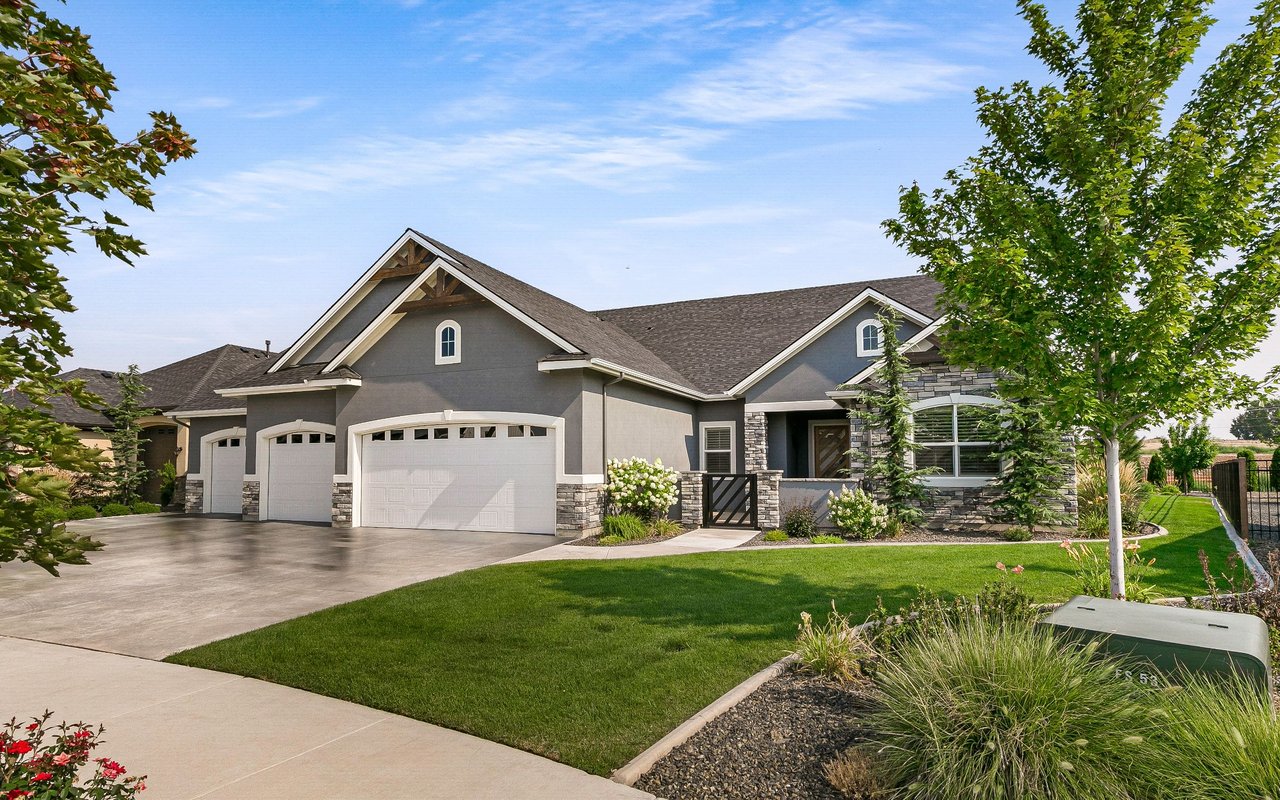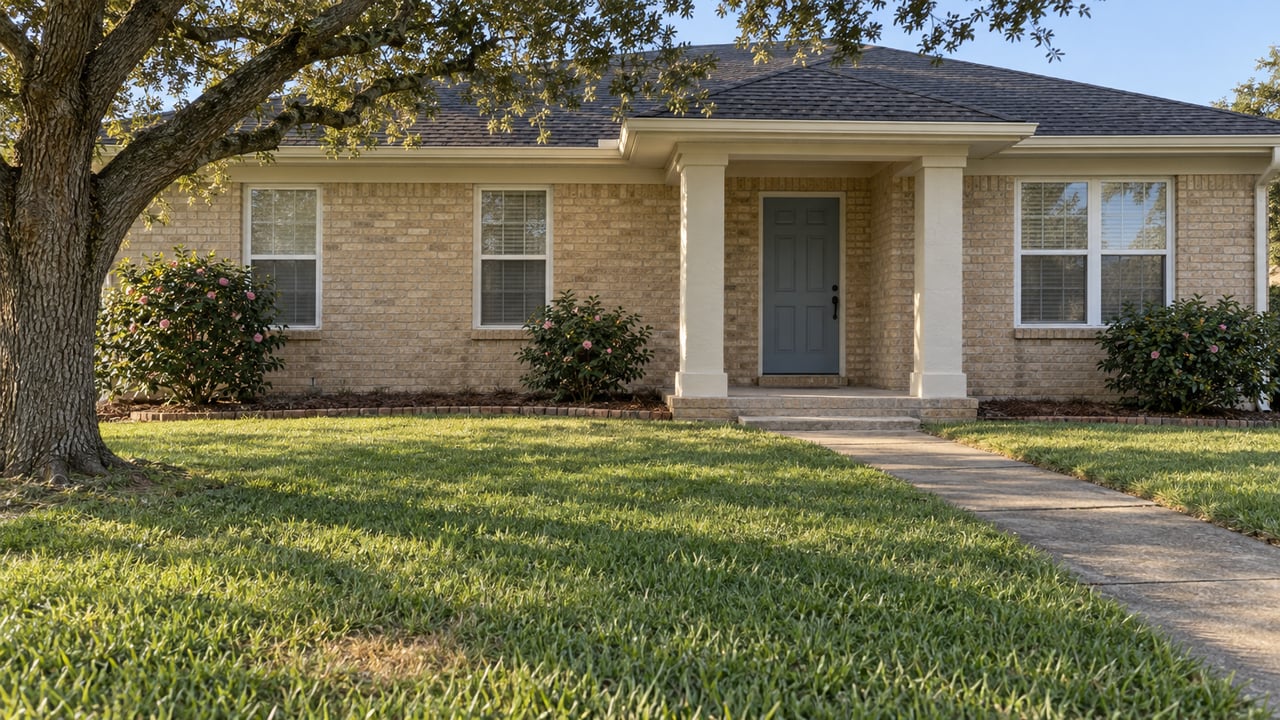
In Florida, the property tax on a listing describes the seller's tax history. It doesn't predict yours. The Santa Rosa County Property Appraiser says a sale resets a home's assessment to full market value. The Save Our Homes protection a long-time owner built up doesn't transfer with the deed. A new owner's cap starts only after that owner qualifies for homestead. For a Gulf Breeze buyer this fall, that reset is the first thing to understand. On November 3, Florida voters decide Amendment 3, which would add a second variable that has nothing to do with the house: the date you became a Florida resident.
A flat rate and a rising levy
Gulf Breeze has a reputation for steady city taxes, and the reputation holds. On September 21, Mayor JB Schluter and the City Council adopted the fiscal 2027 budget and kept the city millage at 1.9723 mills for the 12th year in a row, according to a Pensacola News Journal column published October 4, 2026.
The same budget season produced a Notice of Proposed Tax Increase. Last year's actual levy was $2,685,928, and the proposed levy for this year was $2,860,098. That's roughly 6.5% more money raised at the same rate. Taxable value rose, and the rate multiplied against it.
Owners don't share that increase evenly. A homesteaded owner who stays put is protected by the 2026 Save Our Homes cap of 2.7%, which limits how much the assessed value can rise each year. Non-homestead property is capped at 10% a year, and the Property Appraiser notes that this cap doesn't limit school taxes. A buyer starts at market value. In a city where values are climbing, the newest owners carry a larger share of the bill than their neighbors.
Amendment 3 changes the exemption and mostly leaves school taxes alone
The Florida Division of Elections ballot summary says the amendment would raise the homestead exemption for all non-school taxes to $150,000 in 2027 and $250,000 in 2028, with inflation adjustments after that. It would also cut the non-homestead assessment cap from 10% to 5% and take effect January 1, 2027. It needs at least 60% of the vote to pass.
The key word is "non-school." Today a Florida homestead gets up to $51,411 off for 2026. That's $25,000 that applies to every tax rate, including schools, plus $26,411 that applies only to non-school rates. Under the amendment, schools would still exempt only $25,000. In Gulf Breeze, school millage is almost half the bill.
The Property Appraiser's 2026 certified table shows the split for a home inside city limits and a home in the unincorporated Midway district, which covers much of the Tiger Point and Midway area east of the city.
| 2026 millage | City of Gulf Breeze | Midway district |
|---|---|---|
| City | 1.9723 | none |
| County | 3.8850 | 3.8850 |
| Sheriff | none | 2.0700 |
| NW Florida Water Management District | 0.0201 | 0.0201 |
| Non-school subtotal | 5.8774 | 5.9751 |
| School | 5.4030 | 5.4030 |
| Total | 11.2804 | 11.3781 |
The 2026 certified millage table shows the trade inside city limits. The city's own 1.9723 mills take the place of the 2.0700-mill sheriff levy that unincorporated parcels pay, so the two totals end up less than a tenth of a mill apart. School millage is 5.4030 of the city's 11.2804 total, about 48%. A bigger homestead exemption can reach only the other half.
What that could mean on one Gulf Breeze homestead
The rough math below uses 2026 rates. Rates change every September, and the amendment would need implementing legislation before anyone can calculate a real bill. Read these as estimates of scale. They aren't predictions.
For a homestead whose assessed value is high enough to use the full exemption, going from today's $51,411 non-school exemption to $150,000 in 2027 shelters another $98,589. At 5.8774 mills inside the city, that comes to about $579 a year. In the Midway district at 5.9751 mills, it's about $589.
At $250,000 in 2028, the added shelter grows to $198,589. That's roughly $1,167 a year inside the city and about $1,187 in Midway, again at 2026 rates.
Cities with higher millage would see bigger numbers. Milton's 2026 total is 13.4261 mills, with 4.1180 of it city millage. Gulf Breeze has kept its city rate low for 12 years, so each dollar of new exemption saves a little less here than it would in a place that taxes more.
The December 31 line
For a relocating buyer, the residency date matters more than any mill. The ballot summary says people who aren't Florida residents on December 31, 2026 would get the existing homestead exemption when they qualify. The larger exemption would start with their fifth year of exemption, "to the extent permitted by the U.S. Constitution."
The Santa Rosa County Property Appraiser's amendment page adds the details:
- Permanent Florida residents as of December 31, 2026 would be eligible for the larger amounts starting in 2027.
- Someone who is a Florida resident by that date but hasn't bought yet would get the higher amount when they buy and apply for homestead.
- Someone who becomes a resident on or after January 1, 2027 would start with $50,000 off the first $50,000 of assessed value for non-school taxes. That amount would adjust with inflation beginning in 2028. After four years of keeping a Florida homestead, they would get the larger exemption starting January 1 of the fifth year.
Using the same 2026 city rates, two neighbors with identical Gulf Breeze homes in 2028 could see a gap of about $1,175 a year in non-school taxes, depending only on which side of December 31 their Florida residency began. Under the amendment's text, that gap would close in the newcomer's fifth year of homestead.
The calendar also has a practical step. According to the Property Appraiser's exemptions page, to apply for homestead you must own and live in the home as your primary residence on January 1, and applications are due by March 1. The next filing window runs January 1 to March 1, 2027. The Property Appraiser says some administrative details can't be settled until the amendment passes and the Legislature acts. This post is general information. It isn't legal, tax or financial advice, so check your own residency and filing situation with a qualified tax professional or attorney.
What no exemption reaches
Exemptions reduce taxable value. They don't touch flat fees, and the Property Appraiser notes that future bills can still move with non-ad valorem assessments and fees. Many unincorporated Gulf Breeze parcels have one of those fees.
Midway Fire District charges residential property $318.66 for up to 1,600 square feet, plus $0.1640 per square foot above that. By that schedule, a 2,400-square-foot house would pay about $450, whatever happens on November 3. Santa Rosa County may also add MSBU charges for things like street lighting, paving, canals or stormwater. Those vary by parcel and appear on the annual TRIM notice.
Utility bills follow the city line too. Gulf Breeze's fiscal 2027 water and sewer resolution, for service billed after September 30, 2026, adds a 10% public service tax for customers inside city limits and a 10% surcharge for customers outside them. It also raised residential base charges to $18.02 for water and $25.56 for sewer. A Gulf Breeze mailing address doesn't tell you which of these charges applies. The parcel's tax district does.
What the county is planning for
The amendment would hit the services those mills pay for. WEAR reported on September 23, 2026 that Santa Rosa County Administrator Brad Baker said the county could lose $22 million if the amendment passes, rising to $36 million the next year. He also said the county had already trimmed $9 million from next year's budget and eliminated 23 vacant positions. Florida TaxWatch projects a broader figure across all Santa Rosa local governments, $26.7 million in fiscal 2027-28 and $226.7 million over five years, using July 2026 state estimates. The two projections measure different things and shouldn't be added together. On the other side, Florida Realtors announced its support for the amendment on August 23, 2026.
The ballot text also limits what counties and cities could spend property taxes on, naming categories that include public safety, schools, infrastructure and natural resources. Under the amendment, millage rates would still be set locally each September. The 12-year streak at 1.9723 mills is a City Council decision, and the amendment doesn't lock it in.
A few questions that come up
When would a homeowner see a change? If it passes, the Property Appraiser says the amendment would first show up on August 2027 TRIM notices and on tax bills delivered in November 2027.
Does it replace Save Our Homes or portability? No. The Property Appraiser says it wouldn't eliminate or replace Save Our Homes and wouldn't change portability. Portability lets a Florida homestead owner who moves to a new Florida homestead carry over all or part of the assessment difference they built up.
What if it fails? The rules the Property Appraiser describes under current law would continue. That means the $51,411 maximum homestead exemption for 2026, the Save Our Homes cap and the 10% non-homestead cap, and a sale still resetting the assessment to market value.
Can I estimate my own number? The Property Appraiser offers an amendment estimator that works by parcel. It's the closest thing to a real figure until implementing rules exist.
If you're comparing Gulf Breeze houses on both sides of the city line, I can pull each parcel's tax district, fire assessment and utility provider, and estimate what the bill would look like after the sale resets the assessment. Sometimes that's a different number from the one on the listing. Luker Smith can walk you through it. Let's Connect.